
About the course
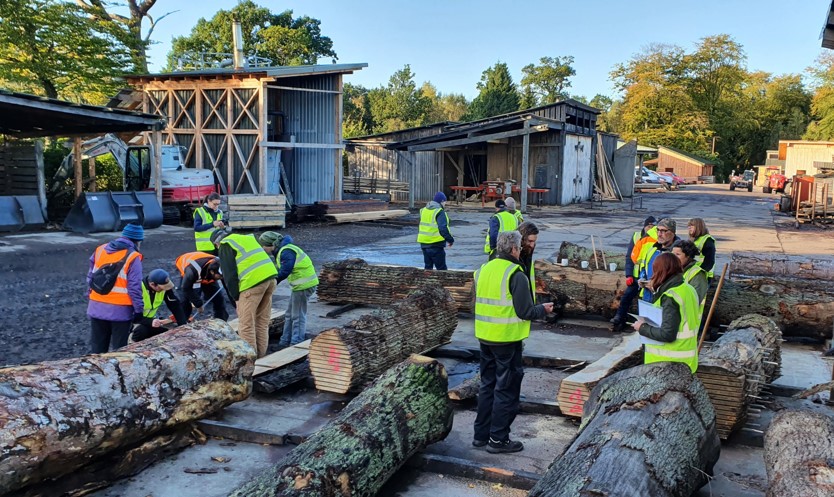
Working Woods Scotland is a 3-day practical training course in homegrown hardwoods. It is based at the Scottish Wood sawmill in Fife.
The course brings together professionals from across the industry – from foresters and woodland managers, to sawmillers and woodworkers. We aim to bring together a diverse group of participants coming from different backgrounds and experiences within the sector, building links and encouraging trade and collaboration.
Many aspects of the hardwood industry will be covered (with some premium softwoods included, in particular larch and Douglas Fir). Attending the course you can expect to learn about silvicultural practices for timber production; grading and valuing standing timber and round logs; hardwood processing such as milling and kilning practises; and finding a market for your timber products.
Course outline
Day one:
Our course will start with a brief background to forestry and hardwood sawmilling in Scotland, setting the scene for the environment in which ASHS and Working Woods were born and operate.
From there we’ll venture into the woodland beside Scottish Wood, assessing mature, standing timber and discussing the various features and faults visible in the trees, and how these may affect their quality and marketability to the timber trade.
In the afternoon, we’ll be turning our attention to some of the logs at the sawmill and learning how round timber is measured, graded and valued. We’ll be looking specifically for the any signs of the features and faults that were identified on the standing trees in the woodland: assessing how these may impact of the valuation of our logs in the yard and how best to market our logs to the trade.
Day two:
Day two takes place almost entirely out in the woodland and on our route around Inzievar Woods, we’ll be assessing the six factors for growing quality timber:
- Choosing your seed sources
- Selecting the right species for the site
- Stocking density
- Cultivation and weeding
- Pest control
- Selective thinning and pruning
Always throughout the day we’ll be referring back to our goal of producing quality, productive timber.
Day three:
On our last day we’ll turn our attention to the stages required to process our logs into marketable timber. We’ll go over the practises of measuring and valuing sawn timber, always referring back to the features or faults that were identified in the standing trees, and how these have affected our final sawn boards.
At the mill we’ll also look into the various stages of sawing, seasoning and further processing, discuss the different value added by each step and how best to market processed timber to public and trade.
Funding
Working Woods Scotland is eligible for funding through the Lantra Women in Forestry and Future Foresters training funds.
For more information, or to apply for either funding, visit the Working Woods Scotland listing on the SKillsHub website.
When these funding pots are open for applications, you’ll see the option to Apply beside the “Find out more” button.
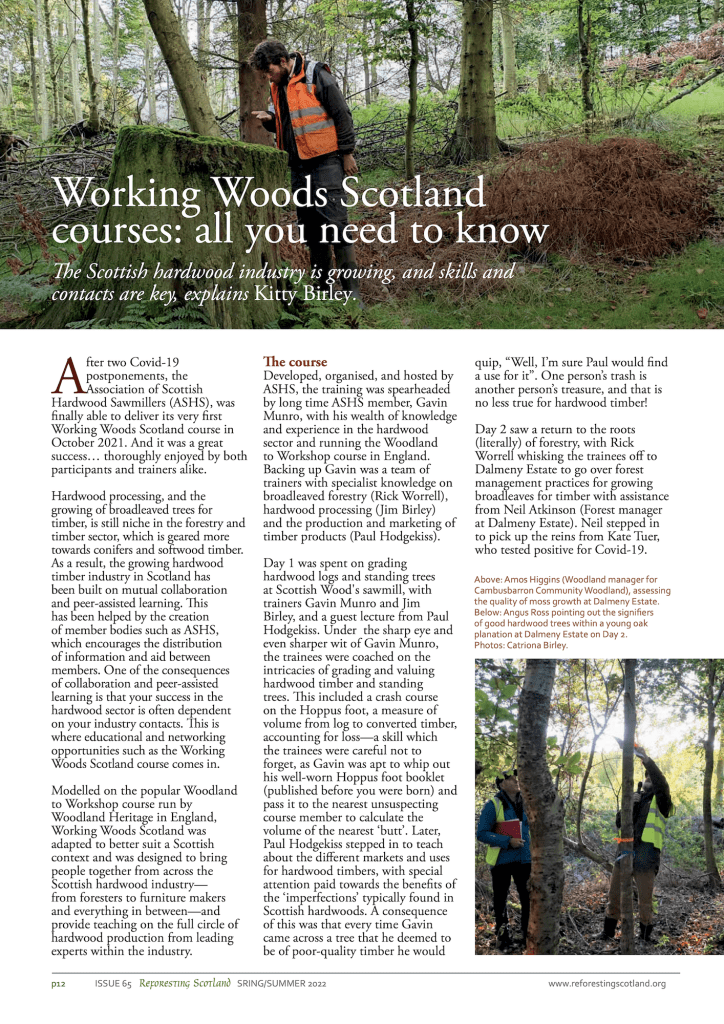


 Working Woods Scotland Course